MLTaiko
Estimating the difficulty of a Taiko no Tatsujin chart from its notes.
Rating a chart
Custom Taiko charts can ship without a difficulty rating. MLTaiko reads a .tja file and predicts a level from one to ten stars. The command-line tool can rate one course, scan a folder, or fill in a missing rating.
The model combines 44 chart-level features with a sequence model that reads the measures in order. That gives it both an overview of note density and a view of how the rhythm changes through the song.
GitHub repository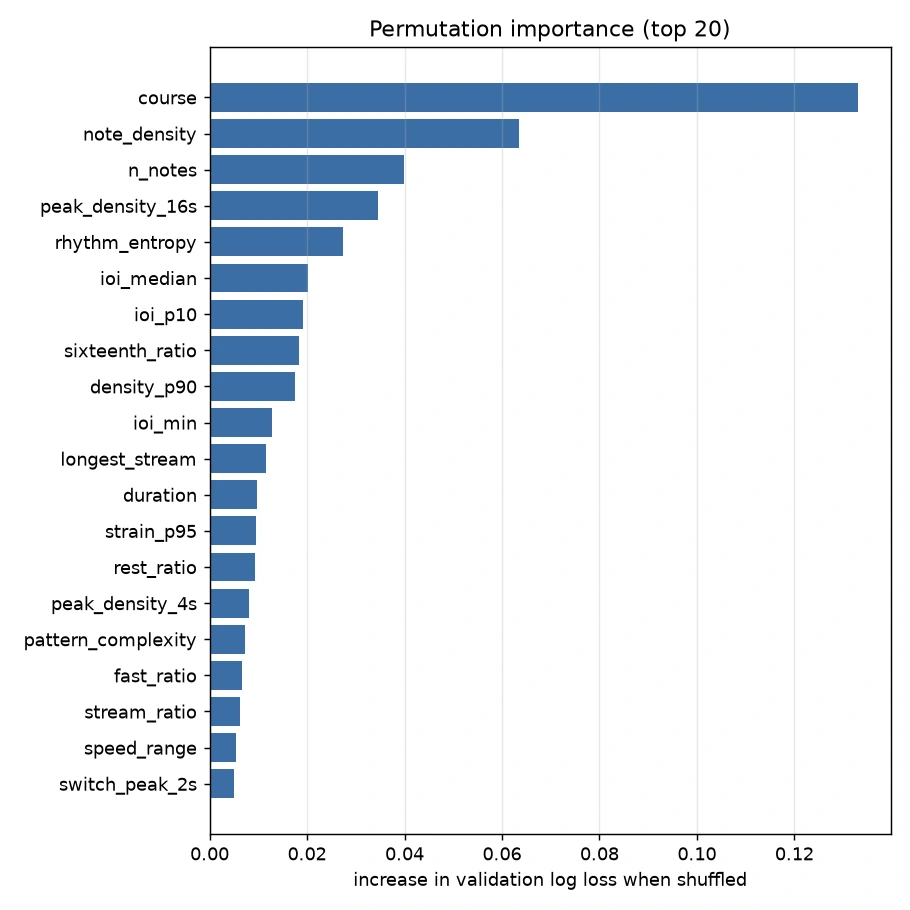
How close are the ratings?
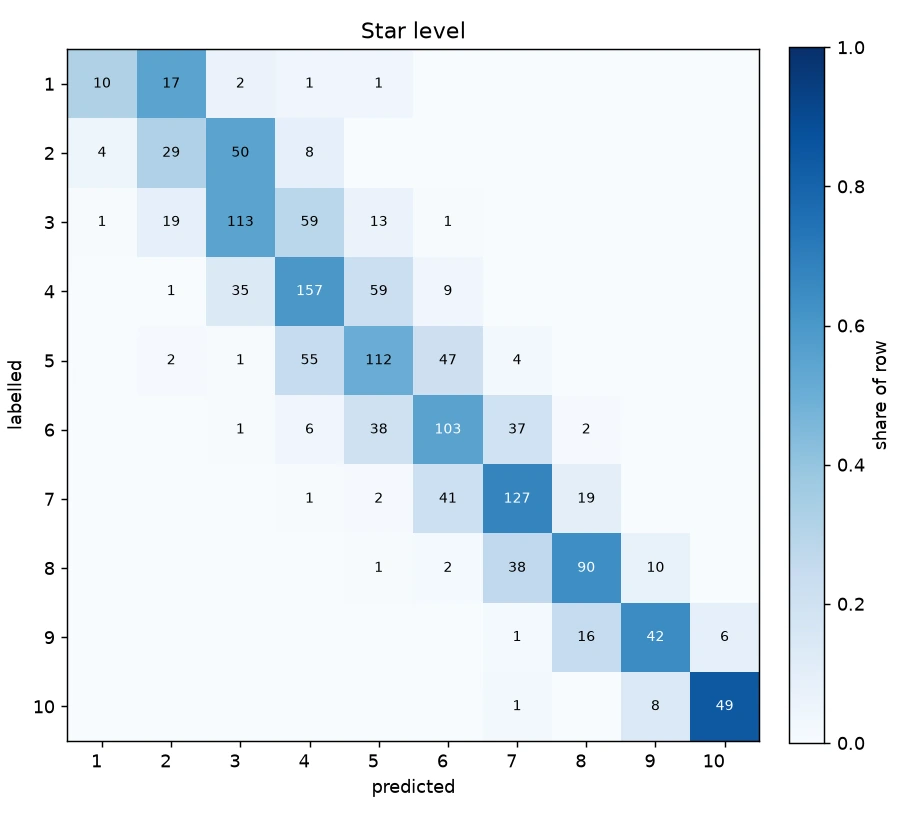
The evaluation held out entire songs so that other charts for the same song could not appear in training. Across 1,451 test courses, the model matched the rating exactly on 57.3% and came within one star on 95.8%.
The diagonal band in the results shows where mistakes land. Most are between neighboring star levels. Course type, average note density, and note count have the greatest influence in the feature analysis.
The original study
In fall 2025, Nicole Huynh, Alan De Luna, Miles Davis, Sanjith Shanmugavel, and Theo Bui studied chart difficulty for UC San Diego’s COGS 118B course. Their paper tested a random forest on 28 features. The later repository reproduces that experiment and explores additional rhythm features and sequence models.
Read the research paper